
Primary and regional fixed-income desks clear $1 billion to $180 billion a month on AFS — with higher automated throughput and meaningfully lower headcount than legacy processing.
Sell-side MBS processing is still largely manual. Legacy approaches require two to three times the operations headcount to clear comparable volume. In the age of automation, that’s a structural disadvantage.
Primary and regional dealer clients across the full volume range.
When a client offsets with a round robin, both dealers are left holding part of the difference until settlement date. When they assign, one dealer is closed out entirely and the other carries the whole net. Same economics, different exposure, different collateral.
An assignment takes one counterparty flat at the point it completes. Nothing left to mark, nothing to margin, nothing to reconcile at settlement.
SIFMA allows up to 12 hours for an assignment to reach the third dealer, and firms send when they process. Automated delivery means it arrives in seconds, not at the end of the window.
Round robin legs are genuine market trades that land in your book and have to be processed. Assignment trades are booked at the original prices and are not new market exposure.
| Legacy / manual | AFS | |
|---|---|---|
| Automated throughput | Partial | High |
| Ops headcount | 2–3× higher | < 3 FTEs |
| Overhead model | Brick & mortar | Virtual / low cost |
| Exception handling | Queue | Color-coded |
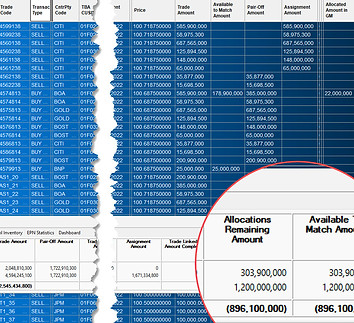
Create custom user projects and templates to standardize operations.
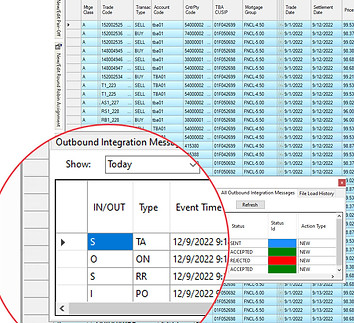
Users see and manage all trade and clearance flows.
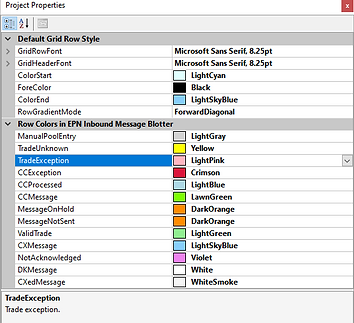
Exception-based EPN messages are color-coded to aid user prioritization.
All dealer-required clearance and settlement functionality in one place.
See the dealer workflow end to end.